
How Bot Filtering Keeps Your Email Reports Accurate
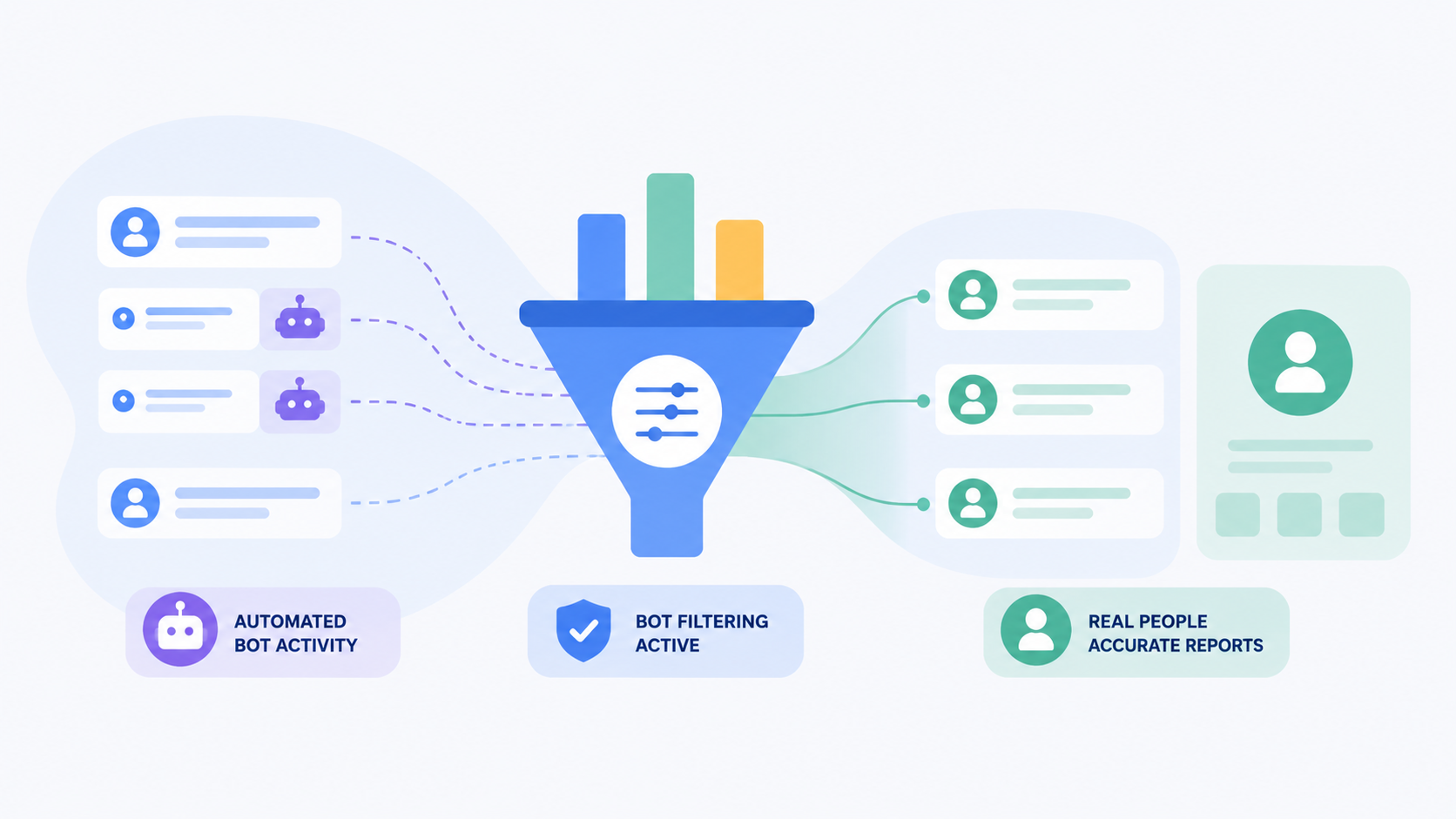
Many South African businesses rely on open and click-through rates to understand how well their newsletters are performing. These metrics are central to reporting success, identifying engagement trends, and refining content strategy.
However, due to the way modern email systems and cybersecurity filters work, a portion of your recorded opens and clicks may not come from real people at all — they may come from automated software known as bots.
BulkMail’s platform includes a built-in protection system that detects and filters these automated events. When this filtering is activated, you may notice a drop in your reported open rates. This is not a decline in genuine engagement — rather, it’s a more accurate reflection of your real audience behaviour.
This article explains why these automated scans occur, how they affect reporting, and why enabling filtering ensures fair and reliable performance data.
What Are Automated Email Scans?
Most corporate and government mail servers now use sophisticated software to protect their users from phishing, malware, and spam.
Before your newsletter even reaches the recipient’s inbox, this security software performs a pre-delivery inspection. It scans the message, checks all the links, and ensures that nothing inside the email could pose a risk.
To carry out this inspection, the system may:
- Open the email automatically, simulating a real “open”.
- Click on each link, to verify that it leads to a safe and legitimate destination.
This process is known as automated link scanning. While it is an essential safety feature, it can make email analytics appear inflated because each automated “open” and “click” looks identical to genuine user activity in raw tracking data.
Why Automated Scanning Affects Open Rates
When BulkMail records an email as “opened”, it happens because a tiny invisible tracking image has been loaded from the server. If security software opens the message first, that image loads automatically — creating a false open.
In a typical campaign, these automatic opens can represent a significant portion of total open activity. The higher your proportion of corporate, educational, or government recipients, the greater the likelihood that automated scanning will affect your numbers.
When bot filtering is not enabled, these automated opens remain mixed in with genuine engagement. Once filtering is switched on, BulkMail begins to identify and exclude automated sources based on known patterns, resulting in a more realistic open rate.
In short:
- Your total opens may appear lower, because false opens have been removed.
- Your true engagement visibility improves, because you’re seeing only genuine interactions.
Why Click-Throughs Are Not Affected
BulkMail differentiates between automated link scanning and genuine user clicks.
While automated systems do sometimes click on links during security checks, these are recorded and identified separately. Once bot filtering is active, BulkMail excludes them from your reports, meaning the clicks you see represent real human engagement.
Therefore, while open rates may reduce, your click-through rate (CTR) remains an accurate indicator of genuine audience interest. This is the most reliable measure of whether recipients are taking meaningful action after reading your email.
Why Filtering Is Important
Accurate reporting is crucial to making good marketing decisions. Inflated data can lead to misleading conclusions about your audience’s behaviour and can distort long-term performance tracking.
When you activate bot filtering, you are:
- Normalising your results — bringing reported opens back to genuine levels.
- Protecting campaign logic — ensuring that automated scans don’t trigger workflows or automation rules unnecessarily.
- Improving deliverability — because accurate engagement data helps maintain a positive sender reputation.
- Supporting POPIA compliance — by ensuring personal data reflects real human activity and not artificial triggers.
It can be surprising to see open rates fall, but this adjustment is actually a sign of improved accuracy, not reduced interest.
Typical Scenarios That Trigger Automated Opens
Automated scanning behaviour can vary widely depending on how recipients’ email systems are configured. Some common examples include:
- Corporate and educational networks that pre-screen all emails before delivery.
- Mail security services that “sandbox” links to test for viruses or phishing attempts.
- Cloud-based filters that download and inspect images automatically as part of content analysis.
- Gateway scanning systems that open messages on behalf of users to ensure safety.
These actions often take place within seconds of delivery, sometimes before the email even appears in the recipient’s inbox. Because BulkMail tracks all activity in real time, those automated checks register as opens and, occasionally, as clicks — even though the recipient has not yet read your message.
How BulkMail Identifies Automated Activity
BulkMail continuously monitors the source IP addresses and user agent strings associated with opens and clicks.
When a known security system performs these checks, its signature matches recognised patterns. BulkMail can then classify that activity as automated and exclude it from your reports when bot filtering is enabled.
This process ensures that the performance data you see in your dashboard reflects genuine user engagement and not the background noise of automated scanning.
What to Expect After Enabling Bot Filtering
Once filtering is turned on in your account, you may notice several visible changes in your campaign metrics:
- Lower open rates: Because automated opens are being excluded, reported figures now represent only verified human activity.
- More consistent performance trends: Without sudden spikes caused by scanning, engagement patterns will become more stable over time.
- Unchanged click-through data: Since clicks from genuine users remain fully counted, your CTR continues to provide a reliable measure of interest.
- Cleaner automation triggers: Workflows and follow-up sequences based on opens will now trigger only for real users, improving relevance.
These changes do not mean your emails are performing worse — they mean your data is now honest and trustworthy.
Why a Lower Open Rate Is a Positive Sign
When you first see a drop in open rates after activating filtering, it’s natural to feel concerned. However, this change is a positive reflection of improved reporting accuracy.
Imagine your previous open rate was 45%, but a large portion of that figure came from automated scans. Once filtering is applied, you might see it drop to 30%. The lower figure is not a loss of audience engagement — it’s simply a more accurate representation of how many people actually read your message.
This level of transparency helps you:
~ Evaluate content quality more reliably.
~ Benchmark performance fairly across campaigns.
~ Focus on growing genuine engagement rather than artificial volume.
Best Practices for Accurate Reporting
To make the most of accurate engagement tracking, consider the following recommendations:
Compare metrics over time, not in isolation. Focus on trends over several campaigns rather than reacting to one-off fluctuations.
Prioritise click-throughs as the key measure of success. Open rates are useful for gauging subject line appeal, but clicks better reflect audience action.
Segment your audience intelligently. Use segmentation to separate highly engaged contacts from those who rarely interact.
Maintain good list hygiene. Regularly remove inactive or unverified addresses to strengthen deliverability and reporting accuracy.
Avoid over-automation. Base important workflows or follow-ups on a combination of actions (opens, clicks, and conversions) rather than opens alone.
Educate your team and stakeholders. Explain that a lower open rate following bot filtering means the data is more credible, not less successful.
By understanding that open rates may decrease as accuracy improves, you ensure that decisions are based on authentic, measurable engagement — a vital part of sustainable email marketing success.
Further notes...
Bot filtering is an essential tool for modern email deliverability and performance tracking. It removes the artificial “noise” created by automated security systems, providing a clearer picture of how real people interact with your emails.
A temporary drop in open rates simply means your reports now reflect genuine human engagement — not inflated figures generated by machines. Your click-through rates, deliverability, and overall campaign performance remain unaffected and, in fact, become more dependable.
BulkMail’s goal is to help South African businesses build trust with their audiences through accurate, transparent, and compliant communication. Filtering out automated activity is a key part of that commitment.